
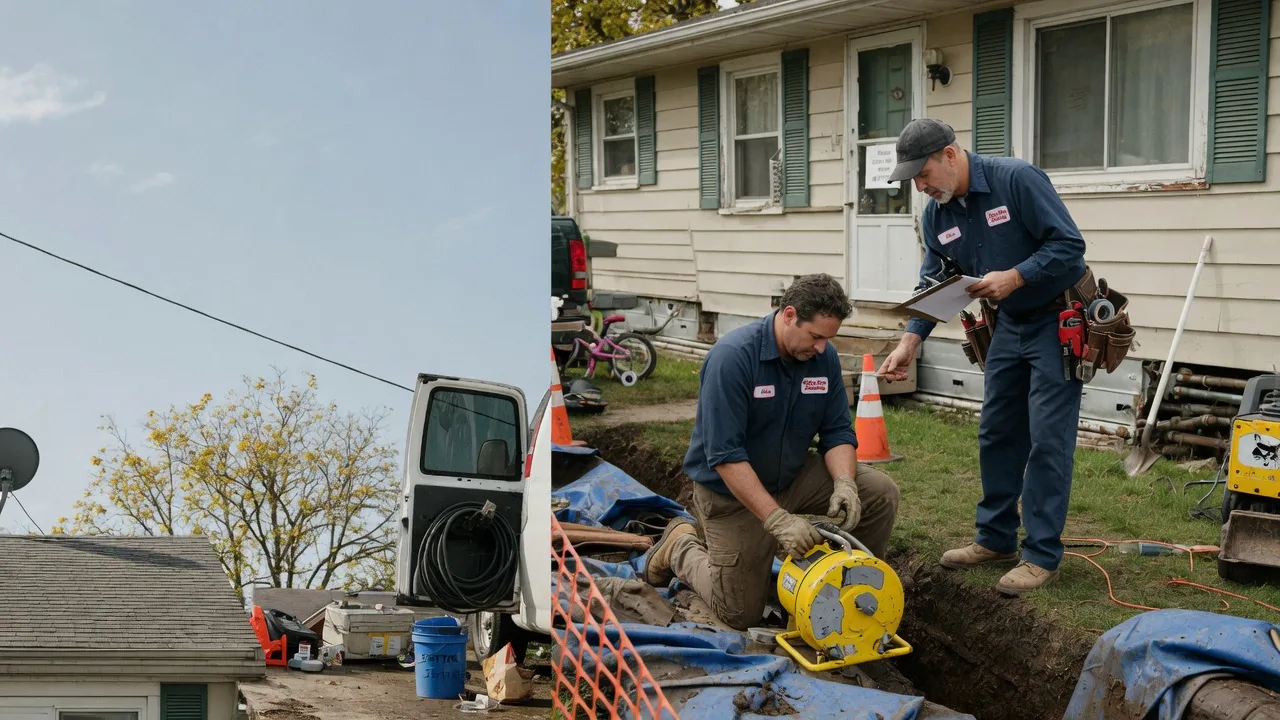
Kitchen sink drain cleaning clears the grease, food debris, and soap scum that build up in the P-trap and branch line until water backs up or drains slowly. A plumber augers or hydro-jets the line, then confirms full flow at the trap arm. Most kitchen clogs sit within the first 10–15 feet of pipe.
The kitchen line takes the worst of the load — fats, oils, and coffee grounds cool and harden against the pipe wall, narrowing a 1.5-inch drain to a trickle. We start at the P-trap under the sink, then run a cable auger or a focused jetter down the branch line toward the main. If your home shares a disposal and dishwasher on one trap, the connection point is a common choke spot. Signs you need it: water pooling in the basin, gurgling from the disposal, a sour smell, or a sink that drains fine alone but backs up when the dishwasher runs. Cost in Lynn Haven, FL tracks with how far the clog sits and whether the line needs jetting versus a simple snake. Recurring clogs usually mean grease in the branch line, not just the trap — worth a camera look.